Investigative Reporting on India’s Escalating E-Waste Crisis
Staff Writer: Zoya Ahmed
Published on: April 14, 2026, 6 p.m.
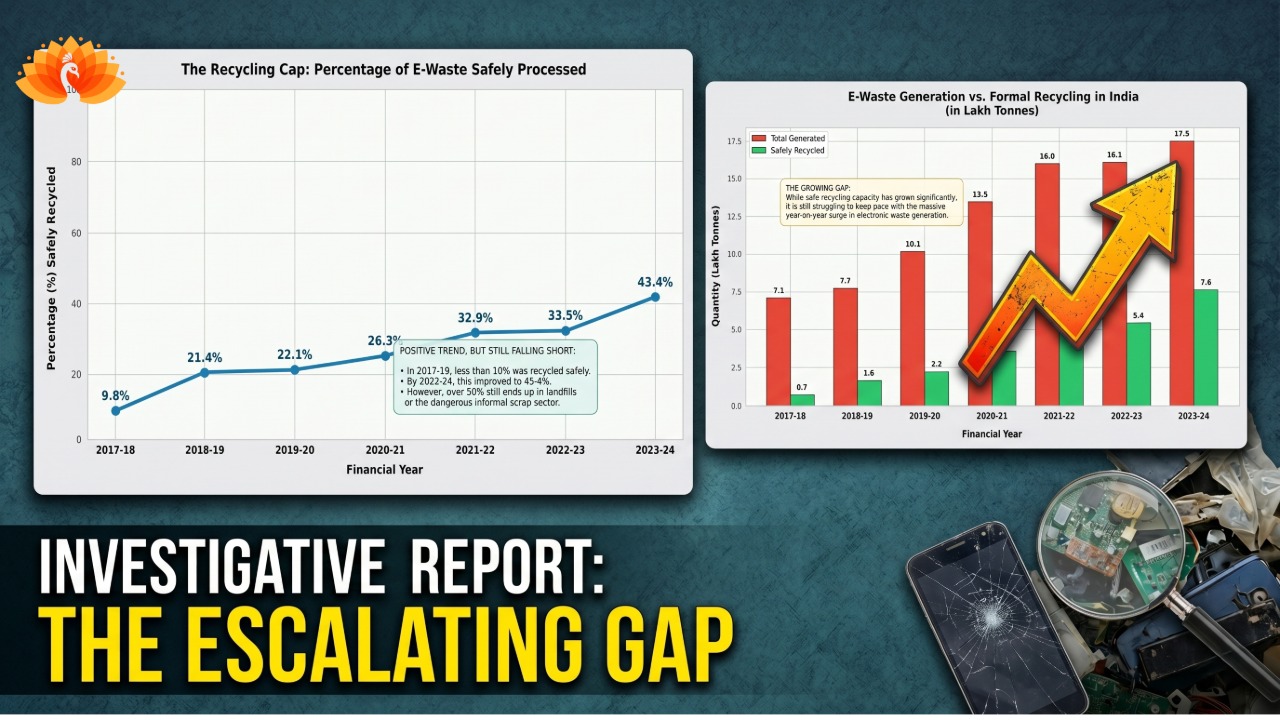
With the rapid expansion of digital technology, electronic devices have become an essential part of daily life. However, this progress brings a highly toxic byproduct known as electronic waste, or simply "e-waste." E-waste refers to any discarded electrical or electronic devices, ranging from old mobile phones and laptops to broken refrigerators and televisions. Unlike regular household garbage, e-waste contains valuable materials like copper and gold, but also highly hazardous chemicals like lead, mercury, and cadmium. When these items are thrown away improperly, these dangerous metals can leak into the soil and water, causing severe health problems for local communities, including neurological damage and respiratory illnesses. To tackle this, governments worldwide use a policy called Extended Producer Responsibility (EPR). EPR is a rule that requires the companies that manufacture electronics to take responsibility for collecting and safely recycling their products at the end of their usable life. An in-depth investigation into Indian government records spanning from 2017 to 2024 reveals a dual reality. While India's official, safe recycling capacity has grown significantly over the last seven years, it is struggling to keep pace with a massive explosion in the overall creation of electronic waste. The Macro View: A Staggering Increase in Toxic Trash Historical data present a clear picture of India's booming consumption of electronics. In the financial year 2017-18, the country officially generated 708,445 tonnes of e-waste. During that same period, formal recycling facilities collected and processed only 69,414 tonnes. This meant a mere 9.79% of the hazardous waste was safely recycled. Over the following years, the creation of e-waste saw massive jumps. By 2021-22, the total generated e-waste had surged to 1,601,155 tonnes. By 2022-23, the number climbed slightly to 1,609,117 tonnes. In the 2023-24 financial year, generation hit a massive 1,751,236 tonnes. The Micro View: Steady Progress But Widening Gaps Despite the alarming growth in waste, the total weight of successfully recycled e-waste has seen a positive upward trend. In 2021-22, India safely recycled 527,132 tonnes. In 2022-23, this increased to 539,256 tonnes. In 2023-24, formal recycling reached 760,663 tonnes. While reaching a formal recycling rate of over 40% in recent years is a commendable achievement for national environmental policies, it exposes a dangerous gap: hundreds of thousands of tonnes of toxic tech remain unaccounted for in the formal system. This unrecorded waste largely falls into the hands of the unorganized, informal recycling sector. In these informal scrap yards, untrained workers often burn plastic cables and use unsafe acid baths to extract valuable metals. This practice exposes the workers and surrounding communities to lethal toxic fumes and causes immense environmental degradation. Recent Global Updates The struggle to contain e-waste is a severe global crisis. Recent data from international organizations paints a grim picture: According to the United Nations' Global E-waste Monitor 2024, the world produced a staggering 62 billion kilograms (62 million tonnes) of e-waste in 2022. Globally, only 22.3% of this waste was formally collected and recycled. The report highlights that the global generation of electronic waste is growing five times faster than documented recycling efforts. Furthermore, India currently ranks as the third-largest generator of e-waste in the world, positioned just behind China and the United States. This investigation highlights a critical environmental paradox. India has drastically improved its recycling capabilities and implemented stricter Extended Producer Responsibility (EPR) rules, forcing manufacturers to collect their old products. Yet, the sheer volume of our electronic consumption continues to outrun these solutions. Until the government successfully integrates the vast informal scrap sector into a safe, regulated framework, millions of tonnes of hazardous e-waste will continue to poison India’s soil and water. The true measure of success will not just be how much we recycle, but how quickly we can stop the remaining toxic waste from slipping through the cracks.