India Braces for a Difficult Season as Monsoon Falters and El Niño Looms
Staff Writer: Zoya Ahmed
Published on: June 3, 2026, 5:23 p.m.
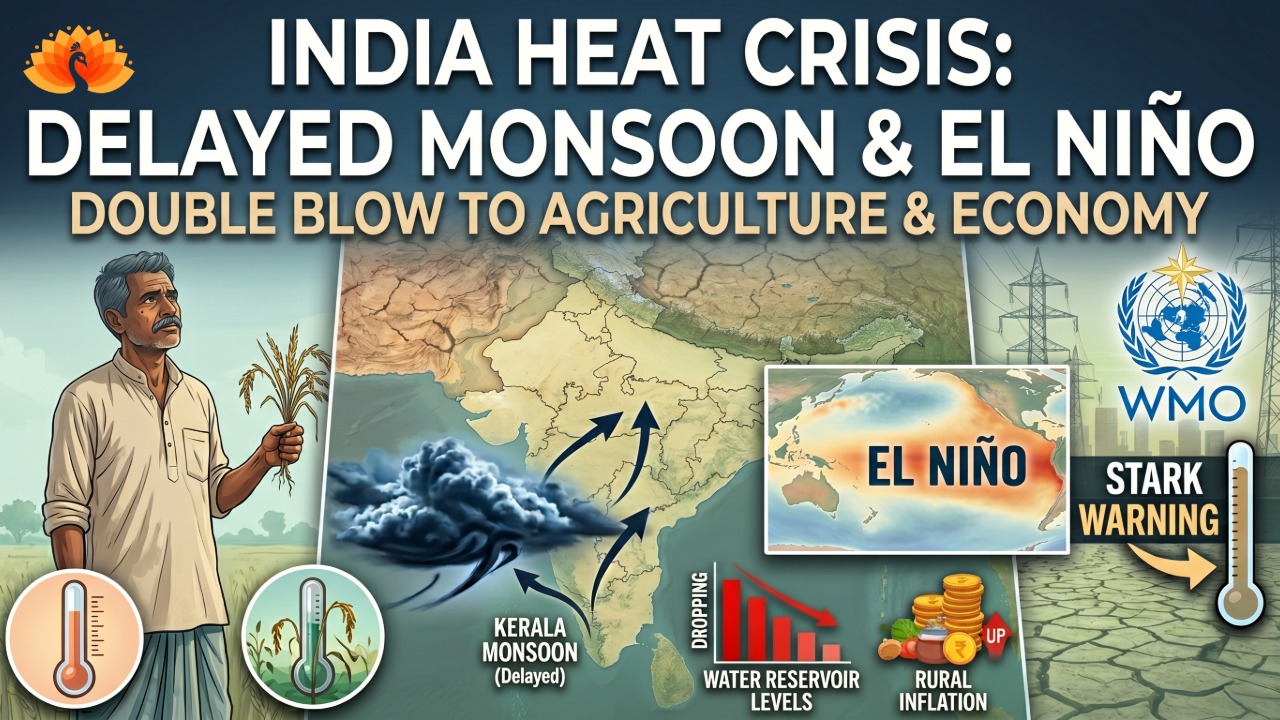
India runs on rain. The southwest monsoon, which sweeps northward from the Arabian Sea between June and September, delivers nearly 70 per cent of the country's annual rainfall and determines the fortunes of hundreds of millions of farmers, the depth of its reservoirs, and the trajectory of rural inflation. This year, it is arriving late, and the weather system building in the Pacific Ocean adds a layer of concern that extends well beyond the calendar. The India Meteorological Department had originally forecast the monsoon's onset over Kerala around May 26, but the projection has been revised multiple times. In its most recent official statement, issued on June 2, the IMD placed the likely onset at around June 4. Although pre-monsoon showers have reached parts of Kerala and cloud cover meets the required standard, westerly winds over the Arabian Sea remain weaker than the threshold the IMD requires before declaring an official onset. El Niño is the periodic and abnormal warming of sea-surface temperatures in the central and eastern tropical Pacific Ocean. It occurs roughly every two to seven years and disrupts wind and rainfall patterns globally. For India, its consequences are historically consistent: weaker monsoons, elevated temperatures, and a heightened risk of drought across large parts of the subcontinent. WMO Secretary-General Celeste Saulo has warned that the world needs to "prepare for a potentially strong El Niño event" that will "exacerbate drought and heavy rainfall and increase the risk of heatwaves both on land and in the ocean," adding that "El Niño conditions will pour fuel on the fire of a warming world." The WMO places the probability of El Niño developing between June and August 2026 at 80 per cent, with a greater than 90 per cent likelihood it persists through at least November. The economic stakes for India are considerable. The Ministry of Finance, in its Monthly Economic Report for May 2026, warned that a developing El Niño could pose significant risks to agricultural production, food inflation, and rural economic activity, with monsoon rainfall projected at around 90 per cent of the Long Period Average. Weaker rainfall could affect kharif crop sowing, reduce agricultural output, and increase pressure on food inflation, at a time when India already faces broader price pressures linked to global geopolitical tensions. The government has pointed to reservoir levels currently at 127 per cent of the seasonal norm as a meaningful buffer, with Agriculture Minister Shivraj Singh Chouhan urging farmers not to worry. Whether that buffer proves sufficient will depend on how the next four months unfold.