Gaganyaan Drogue Parachute Test Strengthens Emergency Safety Systems for Human Spaceflight
Staff Writer: Susmita Ghosh
Published on: Feb. 20, 2026, 9:24 a.m.
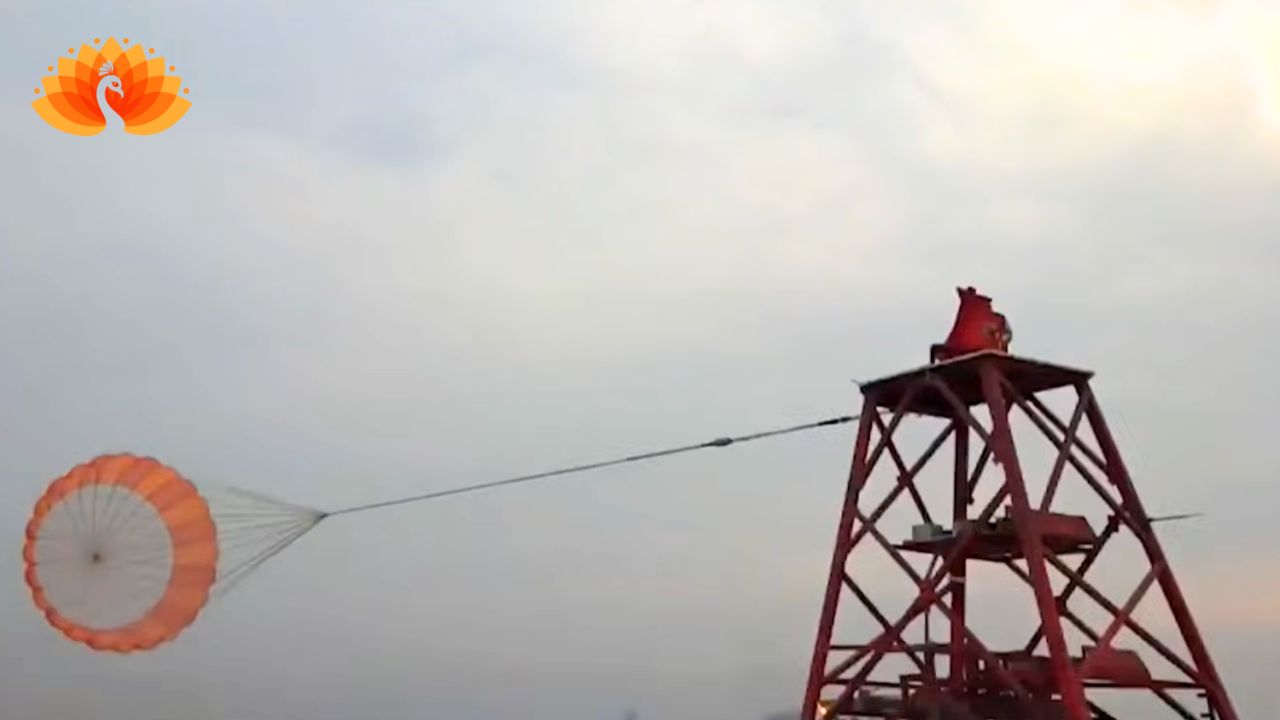
DRDO and ISRO successfully tested the drogue parachutes for the Gaganyaan mission on February 18, 2026. This test was carried out at the Terminal Ballistics Research Laboratory (TBRL) using a special Rail Track Rocket Sled (RTRS) facility. It is very important to keep astronauts safe while spacecraft re-enters Earth’s atmosphere and focusing on this concern this test was found to be most essential in recent times. The main focus was on drogue parachutes. This parachute is 5.8 metres wide and is shaped like a cone. While coming back on Earth, its main work will be to stabilise the Crew Module. Due to high speed and strong forces, when the spacecraft re-enters the atmosphere, it can spin or tumble. In this situation, this drogue parachute acts as a “first-brake”. These drogue parachutes will slow down the module and keep it stable. Later on, to bring the module down gently, larger main parachutes will open safely. Engineers tested the parachute under extreme conditions and ensured that it was safe for use. This was not done alone, there was team work and therefore got success finally. ADRDE (under DRDO) have designed the parachute system, Vikram Sarabhai Space Centre (VSSC) of ISRO further develops rockets and spacecraft and last but not the least, Terminal Ballistics Research Laboratory (TBRL), provided the high-speed testing facility. The successful test represents a major step forward in preparations for India’s G1 uncrewed mission.