India’s Rupee Falls to Record Low Amid Global Oil Price Surge
Staff Writer: Zoya Ahmed
Published on: March 10, 2026, 9:22 p.m.
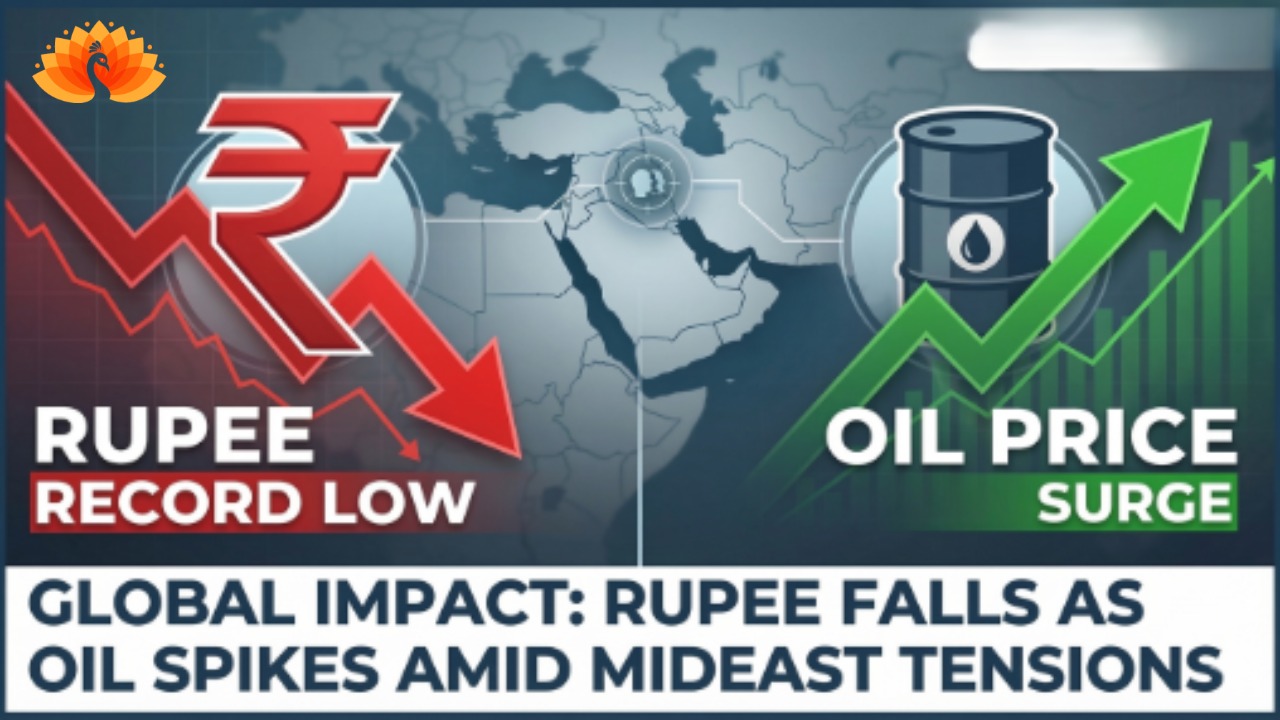
Indian rupee touched its lowest level ever on Monday, fuelled by ever-increasing tensions in the Middle East and a rapid increase in the price of crude oil globally. To the Indian families, a depreciated currency coupled with the skyrocketing energy prices raise instant questions on the escalating price of fuel and the rising prices of daily necessities. The devaluation of the currency underscores the extent to which the domestic economy is being affected by the events happening on a global scale. At the beginning of the trade, the rupee fell to a historic low of 92.52 to the United States (US) dollar and was trading at around 25.12 to the United Arab Emirates (UAE) dirham. It finally ended the day 0.6% lower at 92.3275 against the dollar. The broader financial markets were straining as well, as the main stock market index in India, the Nifty 50, was down by 1.7 %, the single-largest fall in a day in a month. Due to the high levels of foreign fuel consumption in purchasing its fuel, the economy is very sensitive to the prices in the world market. Monday, the world oil price rose by nearly a quarter, or nearly 25 % , to around 116 a barrel. When the cost of oil importation increases, all these extra costs are passed on to the citizens in a domino effect on both transport costs and the cost of food. In spite of these economic fears, the government officials are trying to put the fear at ease. The Finance Minister Nirmala Sitharaman said that the government did not expect a sharp increase in the prices of daily commodities as a result of the war-induced increase in oil prices. In January, consumer inflation, which is the percentage increase in the prices of goods and services, was 2.75%. This amount is well within the 2 to 6% range of the 2-6% Reserve Bank of India (RBI). The RBI has been in full swing in a bid to cushion the economy against further decline. The central bank sold dollars in its holdings to curb further depreciation of the rupee. Analysts observe that, as compared to other emerging economies, the Indian currency is standing stronger due to this tight control. The short-term expectation of the central bank is to continue supporting the rupee, so as to prevent an overload on the oil import bill of the country.