Protecting Youth or Impossible to Enforce? Inside Karnataka’s Under-16 Social Media Ban
Staff Writer: Zoya Ahmed
Published on: March 10, 2026, 9:27 p.m.
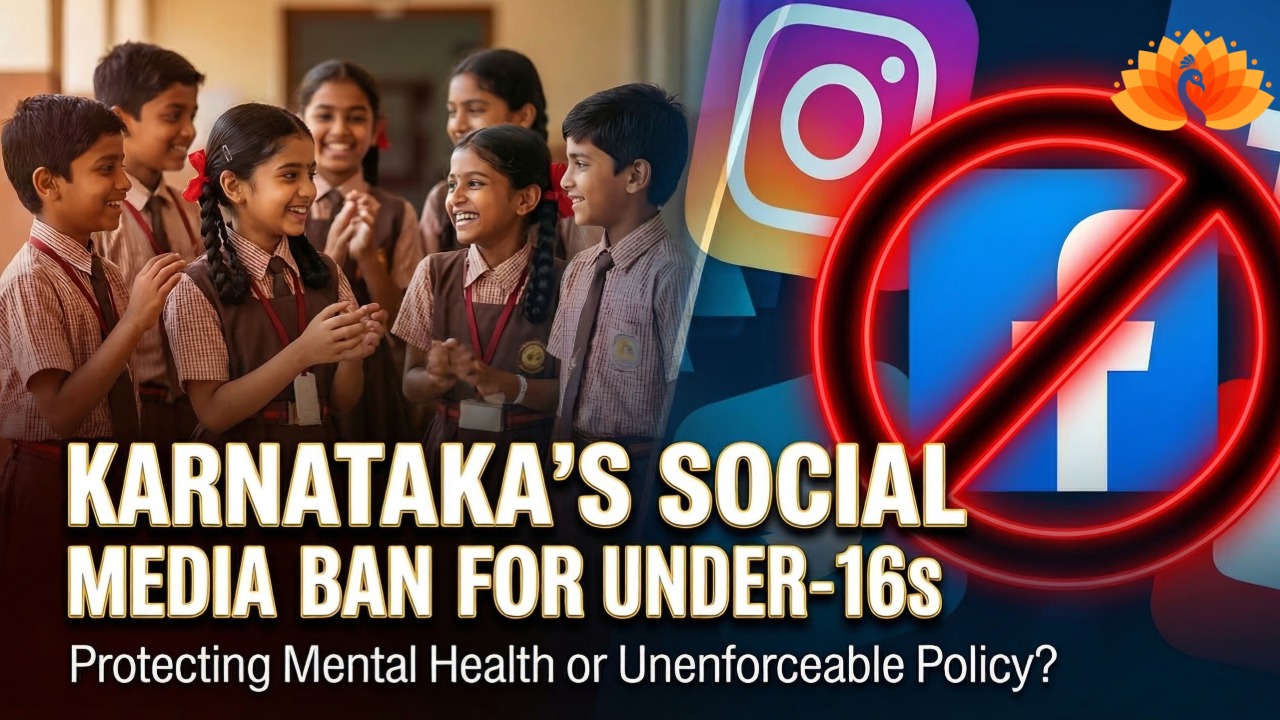
The daily fight over screen time that parents in Bengaluru and other parts of Karnataka face can soon be legally prohibited. In a significant move during the recent state budget presentation on March 6th, 2026, Chief Minister Siddaramaiah announced an outright ban on social media use by children under the age of sixteen. In case of the enactment, Karnataka, the heart of the Indian Silicon Valley, will be the first state to officially ban adolescents on Instagram, Facebook, and YouTube in their attempt to tackle the growing digital addiction. Why the Ban? The Mental Health Crisis The reason behind the ban is something that one can easily identify with in almost any family. It has long been warned by child psychologists and educators that unstoppable scrolling and algorithm feeds harm youth mental health. Clinicians point to growing incidences of sleep deprivation, high levels of anxiety, and a significant reduction in the attention span of students. Through the establishment of this ban, the state government does not consider social media a digital playground but a public health threat, and in this context, the government tries to protect children against cyberbullying and the psychological stress they can have due to unrealistic online comparisons. The Big Question: How Are They going to enforce it? Although the initiative has been widely praised by learning institutions and parents' associations, there is great apprehension among the experts about how it was carried out. The internet knows no boundaries of physical states; according to legal experts, managing digital communication is in the control of the Central Government located in New Delhi, but not per state. In addition, the age limit is a technological dilemma to enforce. In a society where underage children share devices with parents or older siblings regularly, it is challenging to confirm the real user. Technology experts caution that teenagers may be using virtual private networks or fake identities to bypass the restrictions, which may put them at risk of accessing the unmonitored and dangerous parts of the internet. Tech Giants Push Back: Unsurprisingly, the technology sector has retaliated against it. The statement about the threat that state-level bans can drive young users to unsafe services that lack necessary protective measures was made by Meta, Facebook, and Instagram's parent company. Instead of promoting outright bans, corporations and digital rights supporters propose to enhance the age verification systems, introduce strict parental restriction and enforce the provision of extensive digital literacy programmes in schools. What Happens Next? The policy is currently a declaration with no specific enforcement deadline. However, it has sparked off an in turn consequence dialogue in the country, with neighbouring Andhra Pradesh already considering a similar ban to minors below thirteen. With the state government going ahead to develop the statutory framework, all the interest is pooled on whether the state will ever manage to institute a digital restriction on the most famous technology platforms on the planet.