How Bengaluru’s New ‘Sakhi’ Autos are Changing the Daily Commute for Women
Staff Writer: Zoya Ahmed
Published on: March 10, 2026, 9:31 p.m.
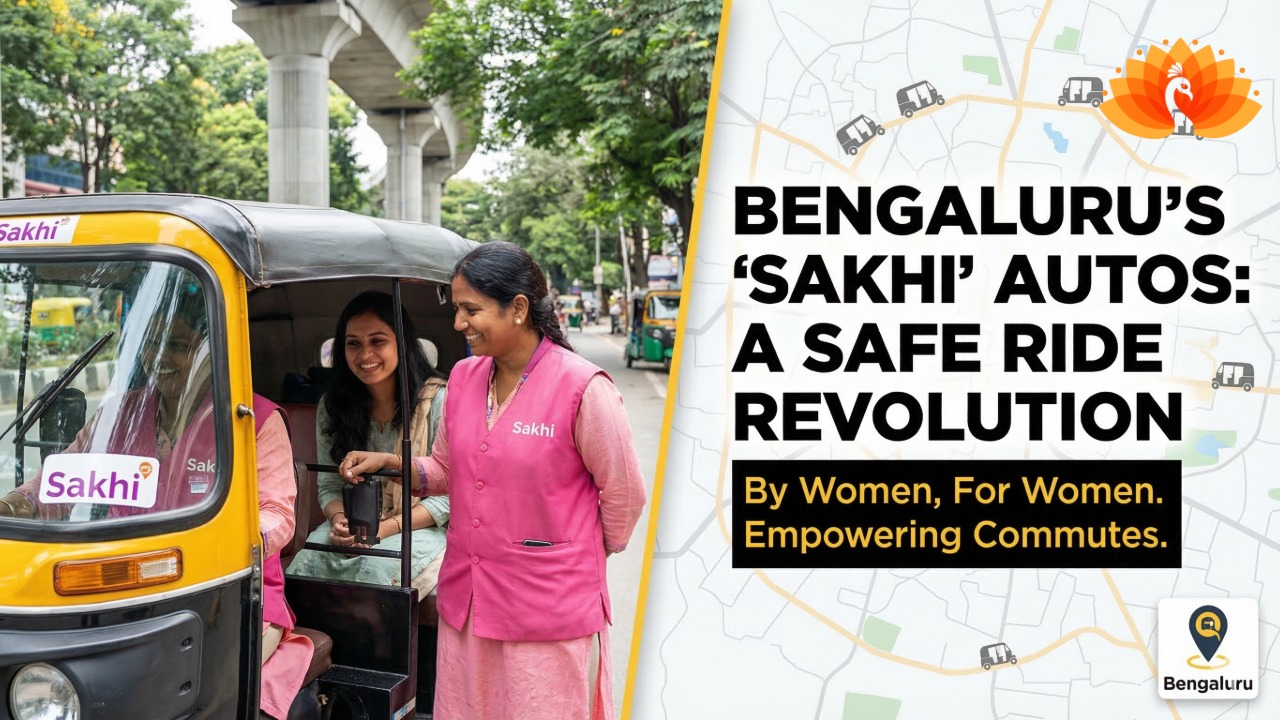
A slight but significant change entered the urban landscape of Bengaluru. The recently opened Sakhi auto-rickshaw venture presented an idea, which, although simple, has significant consequences to the overcrowded transit system of the city: a fleet of female drivers that serves female clients. Located in one of the most active information-technology hubs where people are often forced to spend their day in traffic jams full of nagging worries about personal security and victimisation, Sakhi tries to reinvent urban transportation as something safe and empowering. The price of mental support is one of the primary issues that bothers a great number of women in Bengaluru. Auto-rides, especially after dark or as a result of leaving remote metro stations, may require one to reveal their real-time positions to relatives and observe increased vigilance. Sakhi is a company that was created by a twenty-four-year-old entrepreneur, Krishnavi Parekh, who wanted to relieve this mental pressure. This began with an original number of fifty lady drivers professionally trained and between the ages of twenty-one and forty years. Unlike traditional ride-hailing apps that often include abusive surge pricing in the case of bad weather or high demand, Sakhi operates under a clear and straightforward pricing model: users are requested to pay ₹50 on the first two kilometres and 20 on top of that. Such certainty of fare, in combination with the promise of a female driver, has already been a very powerful message to collegiate students and working professionals. Besides the safety of the passenger, this move is a turning point in allowing women to have economic independence in an occupation that is still deeply patriarchal. Today, the drivers have the right to keep the total of their incomes, which can afford them a stable source of livelihood to support their families or get over the financial crisis. In addition, the platform has openly made promises of progressive growth strategies such as hiring transgender women drivers as the fleet grows. In the prospect, the venture is faced with operational problems even though its initial reception was overly favourable. Rides are available between 06:00 and 24:00 when it is not possible to request rides on the street, but it is necessary to make a one-hour reservation through the official site or a special WhatsApp. Without a specific mobile app that would be used to track the events in real time, which is currently being developed, spontaneous travel is limited. However, to the women in Bengaluru who are willing to plan their travels an average distance in advance and are ready to take on an offer that can be seen to go beyond the convenience of the moment: a ride that they can stop to rest, to breathe, and in other words, to relax.