Voice Vote Defeats Historic Motion Against Lok Sabha Speaker Om Birla
Staff Writer: Zoya Ahmed
Published on: March 12, 2026, 8:23 p.m.
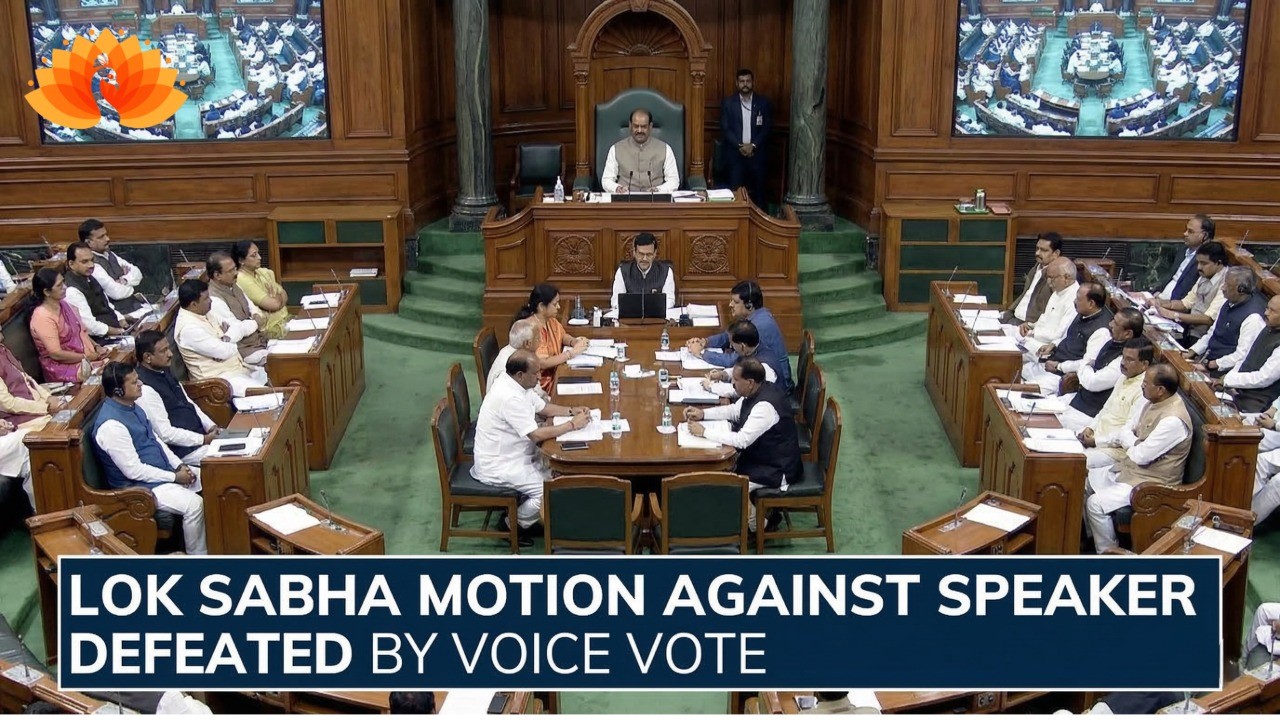
A constitutional confrontation on a highly charged basis had never been seen before and was witnessed on 11th March 2026 in the lower house of the Indian Parliament. After a two-day-long debate, which paralysed the ordinary business of the legislature, an opposition-supported resolution on the removal of the Lok Sabha Speaker, Om Birla, was defeated by voice vote. This was only one of the few times in the history of the parliament of independent India that a no-confidence motion against an incumbent Speaker had been formally admitted and debated, thus revealing the level of tension between the ruling National Democratic Alliance (NDA) and the united opposition block and establishing a controversial mood in the rest of the critical Budget Session. The motion to remove Om Birla as Speaker of the Lok Sabha had about 118 Members of Parliament of various major regional and national parties, including Trinamool Congress (TMC), the Samajwadi Party (SP), and the Dravida Munnetra Kazhagam (DMK), supporting it initially by signing the notice introduced by Congress Member of Parliament Mohammad Jawed. The main case that the opposition put forward was heavy claims of extreme partisanship. Some of the prominent leaders, such as Congress Deputy Leader Gaurav Gogoi and TMC's Mahua Moitra, argued forcefully that the Speaker had neglected the impartiality required of the constitutional office. The charges were precise: Opposition MPs alleged their microphones were constantly interrupted during important discussion sessions, which did not allow the Leader of the Opposition to finish his speech. They also criticised the Speaker for presiding over the largest mass suspension of opposition members in Lok Sabha history and for allowing the important office of Deputy Speaker, which has traditionally been made available to the opposition, to remain unfilled for years. The defence by the government made the no-confidence motion not a political gimmick but an outright attack on democratic institutions. Home Minister Amit Shah strongly defended the neutrality of the Speaker in the debate, saying: The Constitution has assigned the position of a mediator to the Speaker. You put suspicions on the interpreter. Over 75 years, the basis of our democracy has been built by the two houses far more deeply than mere empty accusations. The questions of the Opposition attack the reputation of that deep foundation. In order to refute the accusations of bias using facts, Parliamentary Affairs Minister Kiren Rijiju provided some statistics in favour of Birla. As he observed, in the 18th Lok Sabha, the number of supplementary questions that the NDA MPs were allocated was 321, and the allotted questions to the opposition parties were 364. In addition, among 1,835 issues that were raised in Zero Hour, 56 percent were given to the opposition, which proved that minor voices were allowed to be heard. The very debate was surrounded by procedural conflicts. The fact that BJP MP Jagdambika Pal, who was one of the members of the Panel of Chairpersons, was chairing the session was protested by the opposition members. They claimed that without a Deputy Speaker, the sense of the House ought to have decided the chair to such a delicate motion. After several hours of further discussion, the chair requested the vote of the House. The House was promptly adjourned, with the resolution being voted down in a voice vote. The loss of the motion was mathematically predetermined because the majority of the NDA was clear; nevertheless, the incident prefigures the further structural rift in the Lok Sabha, which promises an uneasy legislative journey in the future.