Mandatory Menstrual Leave Could Harm Women’s Career Prospects, Rules Supreme Court
Staff Writer: Zoya Ahmed
Published on: March 14, 2026, 6:44 a.m.
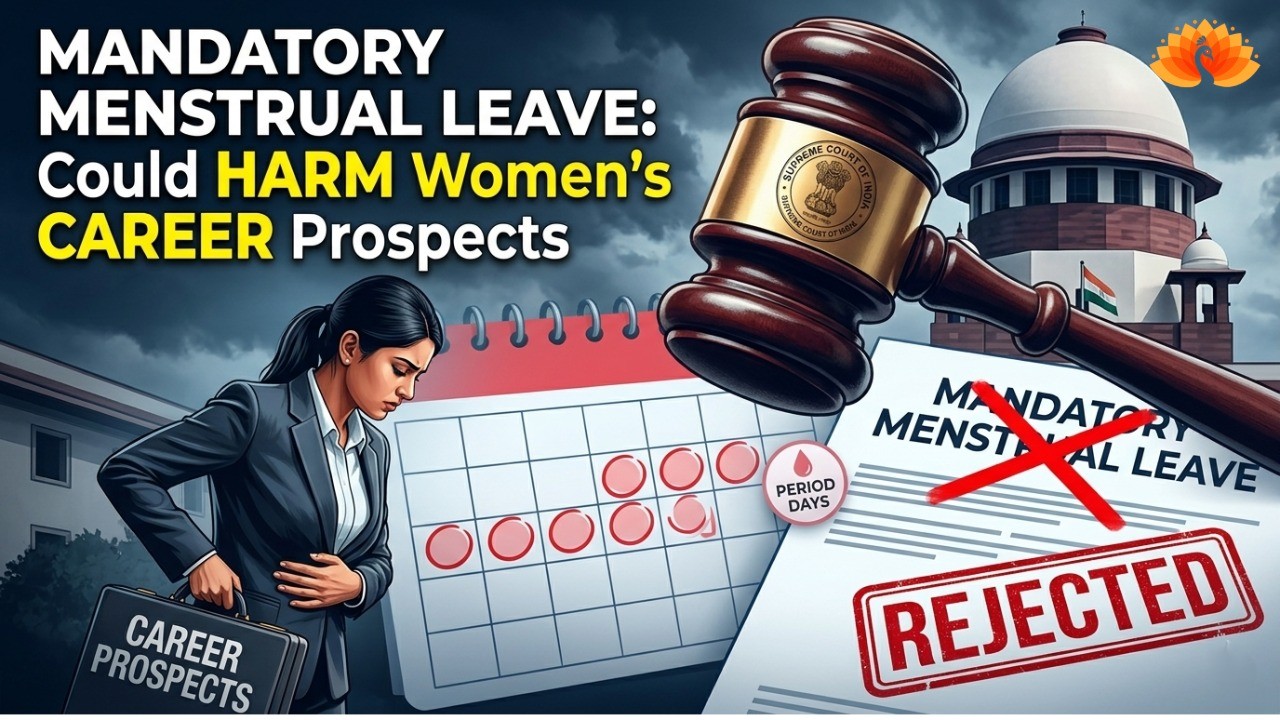
In a groundbreaking ruling that has elicited a lot of controversy both in corporate and social circles, the Supreme Court of India on Friday declined to hear a Public Interest Litigation (PIL) challenging a countrywide, compulsory paid menstrual leave policy by women students and employed persons. The case outlined a very difficult nexus between biology, workforce equality, and unvarnished job market realism. The PIL was dismissed by a bench consisting of Chief Justice of India Surya Kant and Justice Joymalya Bagchi, who instructed the Central government and competent authorities to look into the representation made by the petitioner and only consider drafting a policy after consulting all the interested parties. The Judicial View: “Counterproductive to Expansion. The essence of the Supreme Court's argument was based on the possibility of unintended economic effects. Although the bench recognised that some women are subjected to extremely painful physical symptoms due to disorders like endometriosis and dysmenorrhea, the bench said that forcing employers to give monthly paid leave would essentially be a de facto discouragement of the employment of women. Chief Justice Kant noted that though the intent was welfare-based, the practicality of the private sector may have a counter-productive effect: The moment you present it as an obligatory term of law, you are not sure what harm it will do to the female career, the Chief Justice noted. The bench voiced that such a requirement could encourage employers to declare women as unattractive human resources, hence depriving them of roles that are critical and leadership positions in the private and government sectors, as well as equal opportunities. Voluntary and Mandatory Divide. In line with the hearing, the petitioner Shailendra Mani Tripathi, senior advocate M.R. Shamshad, drew upon already existing progressive frameworks. To point out that states like Bihar and Odisha have historically had menstrual leave policies in place for government workers, and Karnataka has just launched a progressive leave policy for women in the formal industry. Also, such policies have been voluntarily implemented by various private organisations and educational institutions in Kerala. The Supreme Court accepted such voluntary corporate and state-initiated programs but made a firm boundary against legal coercion. The bench contended that although this is made on the spur of the present moment, sympathetic policies on the part of employers are praiseworthy, but implementing them legislatively would unwittingly promote retrogressive gender stereotypes, thereby raising a psychological perception that women are weaker or unable to work professionally on a long-term basis. The Workforce Reality on the Ground. The rejection of the PIL has created a very emotional reaction nationwide. To millions of working women who go through debilitating physical pain silently, the decision is a bitter prioritisation of corporate comfort at the expense of fundamental healthcare. The court now takes a back seat as we move the debate to the boardroom and the legislature. The decision highlights an inconvenient fact about the Indian labour market: even in a real sense of equality in the workplace, women have to weigh their biological conditions against the threat of unpopular prejudices in hiring. With the Centre assuming the role of revising the policy alongside the input of the labour and corporate stakeholders, the dialogue of supporting the health of women without compromising the career path of a woman is more crucial than ever before.